-
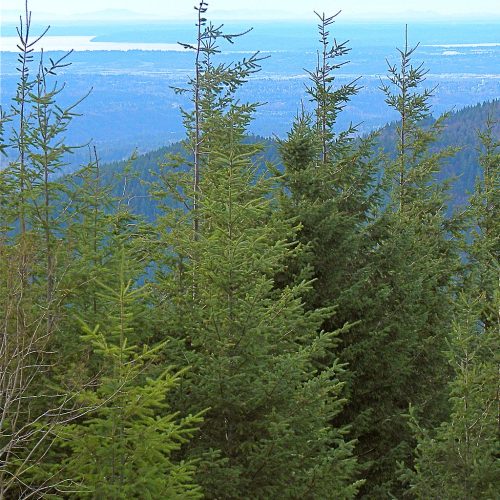
Pseudotsuga menziesii Size/Seed Zone: Bare root 12-18" / 251 Sun: Prefers Full Sun Soil Conditions: Grows on all but wettest soil Special Uses: Timber, supports pollinators, Birds Oregon’s state tree can live over 1,000 years. Thick bark enables it to survive moderate fire. Fast growing, great for wind break. -
Pinus ponderosa Size/Seed Zone: Bare root 12"-18" / 251Soil Conditions: Adaptable - Grows on wet and dry sites Special Uses: Timber, wildlife ,forage, cover, food Native pine to Willamette Valley. Popular for its straight growth habit that exposes scaled, colored bark with a vanilla fragrance. Habitat Notes: This is the valley version of the pine found in central Oregon. The conifer with the highest tolerance for wet clay soils. Can tolerate limited periods of winter flooding as well as summer drought conditions. Needs a substantial amount of moisture to establish in first year, but will not in years 2 +. ID Notes: The only native pine in the valley. Widely spaced branch whorls, long needles and cracked bark. -
Abies procera Size/Seed Zone: Bare root 12"-18"- 251 Sun: Prefers Full Sun, can tolerate sun or some shade Soil Conditions:Prefers deep, rich soils Special Uses: Christmas Trees, wildlife, forage, cover, food Largest true fir, flat needles in two distinct horizontal rows, cones sit upright on branches. Good food and cover for wildlife. -
Thuja plicata Size/Seed Zone: Bare rootSun: Can tolerate some sun or shade Soil Conditions: Moist sites Special Uses: Timber, supports pollinators, birds, bank stabilization Excellent for wildlife cover, for restoration projects, and as an ornamental. Fragrant wood and foliage. Good for erosion control. Habitat Notes: This is an understory species. Will sunburn very easily and will dry out faster than other conifers. Partial shade, filtered light conditions are ideal. Will tolerate more seasonal wetness than fir trees, but requires more drainage than clay soils provide. Susceptible to insect infestations and damage. ID Notes: Very full looking conifer with soft, scaled needles. The only true native cedar to Yamhill Co. lowlands. -
Mahonia aquifolium Size/Seed Zone: Bare root 12 - 18"Sun: Part Shade, Shade Soil Conditions: Dry Special Uses:Habitat Notes: Common in dry, open sites often with shallow, rocky soils. Will also do fine in moist areas with good drainage. ID Notes: Leaves look like holly. Sharp on the points of the leaves. Very glossy green. Flowers are bright yellow in spring. Forms purple berries in the summer. -
Ribes sanguineum Size/Seed Zone: Bare root 12 - 18"Sun: Full sun, can tolerate sun or some shade Soil Conditions: Best on well drained soils Special Uses: Supports pollinators, birds, hummingbirds Beautiful ornamental shrub with white, pink, to deep red flowers that attract butterflies and hummingbirds.Habitat Notes: Often occurs in disturbed sites in full or partial sunlight. Occupies open areas rather than shrubby understory settings. ID Notes: Upright multi-stemmed shrub with distinct pink flowers in early spring. Leaves resemble a salmonberry leaf. Veined and ruffled leaf. -
Abies grandis Size/Seed Zone: Bare root 12"-18" /262Sun: Full Sun, some sun or shade, or full shade Soil Conditions: Moist, seasonally wet Special Uses: Wildlife, forage, cover, food Largest true fir, flat needles in two distinct horizontal rows, cones sit upright on branches. Good food and cover for wildlife.Habitat Notes: This fir is very similar to the more well known Douglas fir. It likes well-drained soils, but can tolerate slightly damper conditions than a Doug. fir. It can tolerate shade early in life, but needs full sun exposure to mature properly. Do not plant in wetland soils! ID Notes: Similar in appearance to a Douglas fir, but the needles are flatter and have 2 white stripes on the underside. -
Quercus garryana Size/Seed Zone: Bare root 12 - 18"Sun: Prefers full sun Soil Conditions: Well drained soils Special Uses: Timber, supports pollinators, birds, hummingbirds Forms wide spreading branches and is slow growing. Important wildlife species. Habitat Notes: Can thrive in a variety of sites from dry, exposed slopes to moist riparian areas. Needs full sun and plenty of space. Do not plant with conifers or fast growing hardwoods. ID Notes: Leaf is distinctly lobed and shiny. Bark is grey. The county’s only native oak. The only local tree that produces acorns. -
Acer circinatum Size/Seed Zone: Bare root 12 - 18" Sun: Full sun, can tolerate sun or some shade, or full shade Soil Conditions: Moist soils Special Uses: Supports pollinators, birds, hummingbirds Attractive fall colors. Suitable for shade, ornamental, or forest under-story plant.Habitat Notes: Forest understory species. Occurs where organic material is high and there is moisture most of the year. Can tolerate full sun as long as there’s moisture in the roots. Pioneer species in disturbed areas. ID Notes: Numerous branches that spread in all directions. Delicate toothed leaves. Helicopter type seeds which are tinged red. Very noticeable in the fall when leaves turn orange, yellow & flaming red. -
Sequoiadendron giganteum Size/Seed Zone: Bare Root Mature Height: 200'+ Sun: Prefers Full Sun Soil Conditions: Prefers well drained sites Special Uses: Wildlife, forage, cover, food Excellent specimen tree. Dense gray-green foliage and reddish brown bark. Northern California native. USDA Plant Database Wildflower Native Plant Database -
Out of stock
Philadelphus lewisii Size/Seed Zone: Bare root 12 - 18"Sun: Partial Sun/Shade Soil Conditions: Moist soils, wet areas Special Uses: Supports pollinators, birds, hummingbirds Clusters of aromatic white flowers at branch ends that attract bees and butterflies in late spring to mid-summer. Erosion control.Habitat Notes: Occurs in a wide range of habitats from forested settings to rocky, dry sites. Filtered sunlight is ideal. Somewhat difficult to establish as a seedling, but fairly hardy after age 3 or so. ID Notes: Erect, loosely branched shrub with simple white fragrant flowers during the summer. Leaves are tender and egg shaped with fine teeth along the edges. -
Alnus rubra Size/Seed Zone: Bare root 12-18"Sun: Prefers full sun Soil Conditions: Moist soils, wet areas Special Uses: Timber, supports pollinators, birds, hummingbirds Good species to plant along streams to provide shade and erosion control. Brownish catkins in the spring.Habitat Notes: Native to the foothills and coast range mountains. Prefers gravelly over clay soils. Prefers full sun conditions. Will be prone to moisture stress during 1st summer. Will grow 3 ft. + / year after established. ID Notes: Leaves are very coarse and deeply veined with slightly serrated edges. Catkins also distinctive. Bark is smooth, light gray and often white with lichens. -
Amelanchier alnifolia Size/Seed Zone: BR 12-18" Sun: Full sun, can tolerate sun or some shade, or full shade Soil Conditions: Moist well drained soil Special Uses: Supports pollinators, birds, wildlife, forage, cover, food, and bank stabilization Easy to grow small tree/large shrub that forms thickets. White flowers and bluish black berries which birds feed upon.Habitat Notes: Adaptable small tree / large shrub that forms thickets. Grows in moist to dry soils in sun or partial shade. Great mid-level canopy tree. Often found in local hedgerows along pastures. ID Notes: Distinctive blueberry like fruit in late summer, early fall. Delicate, small rounded leaves with slight jagged outer edge. -
Spiraea douglasii Size/Seed Zone: Bare root 12 - 18" Sun: Full sun, can tolerate sun or some shade, Soil Conditions: Wet to moist soils Special Uses: Supports pollinators Erect leggy shrub producing pinkish purple flower blooms during July. Attractive ornamental. Great for pollinators.Habitat Notes: Grows in full sun wet areas including wetlands, swamps, and streambanks. ID Notes: Rounded shrub with distinct plumes of lavender-pink flowers in the summer. Flower plumes dry and persist into the winter. Leaves are oval with serrated edges. -
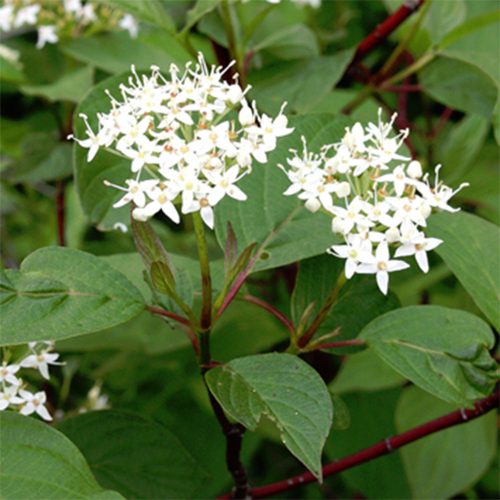
Cornus sericea Size/Seed Zone: Bare root 12 - 18"Sun: Full sun, can tolerate sun or some shade, or full shade Soil Conditions: Moist soil along wetlands Special Uses: Supports pollinators, birds, hummingbirds, wildlife, forage, cover, food, bank stabilization Attractive red stems with white flower clusters that develop into waxy white berries. Fast growing.Habitat Notes: Found in wet to moist areas, along streambanks & swamps. Also, in forested areas. Can tolerate winter flooding conditions. Persists in the same habitat as willow, but can survive drought better than willow. ID Notes: Very full, spreading shrub. Width equal to height. Red stems are very visible during winter when it loses it’s leaves. In summer it has fuzzy white flower clusters which develop into waxy white berries. Leaves are distinctly veined. -
Holodiscus discolor Size/Seed Zone: Bare root 12-18"Sun: Partial Sun/Shade Soil Conditions: Dry to moist site Special Uses: Supports pollinators, birds Multi-stemmed adaptable shrub with persistent frothy white blooms that attract pollinators and provide good cover for birds.Habitat Notes: Found in moist forested sites in the understory and along edges. Somewhat difficult to establish when young, but hardy in later years. ID Notes: Upright multi-stemmed shrub. Plumes of white flowers in mid- summer. Flowers quickly turn brown and persist into fall. Leaves are somewhat similar to a tiny oak leaf with a grayish cast. -
Arctostaphylos uva-ursi Size/Seed Zone:Potted PlantSun: Prefers full sun, can tolerate sun and some shade Soil Conditions: Prefers well drained soils Special Uses: Birds, wildlife, forage, cover, food, bank stabilization Attractive groundcover usually less than 12” tall with dark green leaves and red, edible, but tasteless berries. -
Rosa nutkana Size/Seed Zone: Bare root 12 - 18"Sun: Prefers full sun Soil Conditions: Dry, well drained sites Special Uses: Supports pollinators, birds, hummingbirds Forms dense clumps with large pink flowers. Fruit eaten by birds and small mammals. Browse for deer and elk. Very hardy.Habitat Notes: Found in a variety of habitats from open, dry sites to boggy wet areas. Prefers full sun and some moisture to thrive. Prolific spreader. ID Notes: Straight thorns on stem. Small serrated leaves and pink flowers in early summer. Keeps rose hips through winter. -
Calocedrus decurrens Size/Seed Zone: Bare root Mature Height: 100-150'Sun: Prefers full sun Soil Conditions: Moist sites Special Uses: Birds, wildlife, forage, cover, food Attractively shaped conifer with dense foliage, often used in home landscapes. Wood has pleasant odor. Photo Credit: https://landscapeplants.oregonstate.edu/plants/calocedrus-decurrens -
Symphoricarpos albus Size/Seed Zone:Bare root 12 - 18" Sun: Full sun, can tolerate sun or some shade Soil Conditions: Grows on dry to moist sites Special Uses: Supports pollinators, birds, hummingbirds Adaptable shrub having attractive foliage and clusters of waxy white berries that persist through winter.Habitat Notes: Grows in full to partial sun in a variety of habitats. Very adaptable and hardy. Forms clumps and spreads in hedge-like manner. Low and wide. ID Notes: Delicate oblong leaves. Pinkish small flowers in early summer which produce waxy white berries that persist through winter. -
Physocarpus capitatus Size/Seed Zone: Bare root 12 - 18"Sun: Full sun, can tolerate sun or some shade, or full shade Soil Conditions: Moist soils along wetlands Special Uses: Birds Large spreading, attractive shrub with rounded clusters of white flowers. Maple like leaves, thin shredded bark.Habitat Notes: Prefers moist, but well drained sites along streambanks. Can take full sun exposure well. One of the hardiest shrubs in the county. A riparian “workhorse”. ID Notes: Maple like leaves. Orange peeling bark as the shrub matures. White flower clusters in early summer turning to clusters of red fruit in late summer. -
Frangula purshiana Size/Seed Zone: Bare root 12-18"Sun: Can tolerate sun or some shade, or full shade Soil Conditions: Wet to fairly dry Special Uses: Supports pollinators, wildlife, forage, cover, food, bank stabilization Erect tall shrub or small tree with smooth, silver-grey bark. Glossy green leaves, greenish-yellow small flowers, black berries. Habitat Notes: Occurs in moist well drained soils along streams. More typically found in foothills and mountains of the coast range. ID Notes: Can take a tree or shrub form. Leaves look similar to an alder leaf (distinctly veined). New wood is reddish. Prolific fruit starts green and turns dark purplish-black in the fall. Locally referred to as Chittam tree. -
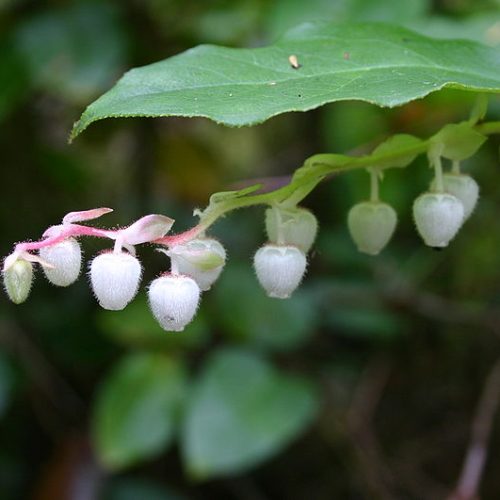
Gaultheria shallon Size/Seed Zone: PottedSun: Full sun, can tolerate sun or some shade, or full shade Soil Conditions: Well drained soils Special Uses: Supports pollinators, birds Dark green, lustrous leaves, white or pink flowers after establishment. Good forest understory species.Habitat Notes: Will grow in a variety of settings, but typically found in a conifer forest understory. Forms thickets and can be invasive in a garden setting. ID Notes: Large green leathery leaves on reddish stems. Flowers are clusters of drooping white to pinkish flowers. Berries are bluish black color and are edible. One of the few local evergreen shrubs. -
Malus fusca Size/Seed Zone: Bare root 12 - 18"Sun: Prefers full sun, can tolerate sun or some shade Soil Conditions: Moist soils near wetlands Special Uses: Birds Native apple with fragrant blossoms producing small green to red fruit. Red and yellow fall color. Habitat Notes: Adaptable small tree / large shrub that forms thickets. Grows in wet to moist soils in sun or partial shade. Great mid-level canopy tree. ID Notes: Easiest to identify in the spring when it produces white to pinkish flowers. Produces small cherry like apples in the summer. Young leaves are tinged with red.