

Miller Woods Activities
Enrich your visit to Miller Woods
Miller Wood’s Discovery Loop Trail
Sponsored by Siletz Tribal Charitable Contribution Fund
Educational opportunity was one of Frieda Miller’s goals when she donated her property to the Yamhill Soil & Water Conservation District in 2004. Since then, hundreds of young visitors participate annually in local school and outdoor education programs at Miller Woods.
The summer of 2019, Miller Woods introduced six educational interpretive signs to compliment the newly created Discovery Loop Trail. The trail is a short, one-third mile loop and made to increase the educational and recreational opportunities at Miller Woods. Visitors will gain insight to the diverse habitat of Yamhill County. Thank you to the Siletz Triable Charitable Contribution Fund, whose grant helped make this wonderful enhancement possible.
The interpretive signs around the loop introduce various plant and animal communities that are part of Miller Woods. Each includes suggested age-appropriate educational activities for visitors. Activity sheets and internet links related to each of the signs are available using the buttons below.
Note: The Discovery Trail is marked in green on the map above (click the map for a larger copy). Notice that it connects in several places to other trails on the property.

Discovery Loop Trail Activities
 Each of the interpretive signs along the Discovery Trail features a Quick Response, or QR code. Scan the code with your phone or tablet to connect back to this page.
Click on the buttons above to view links to activities and related resources.
Wildlife Cover Boards at Miller Woods
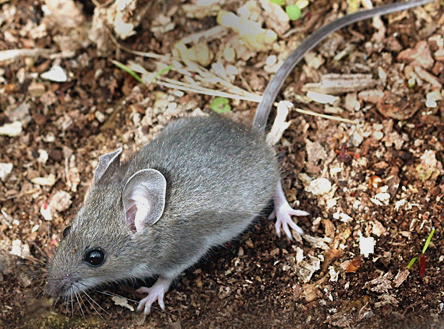
While exploring Miller Woods, take a moment to examine the Wildlife Cover Boards. The boards have a wood frame surrounding corrugated metal and have a handle so you can lift and see what critters may be underneath! Reptiles, amphibians, and/or small mammals may use the boards to stay cool and to hide from predators.
Use the map below to find the locations of all eleven boards. Below, you will find descriptions and photos to identify the various animals you may find hiding under or around the cover boards. Animals may not always be present… but you never know what you’ll find!
Click on an animal photo below to see their name and description!
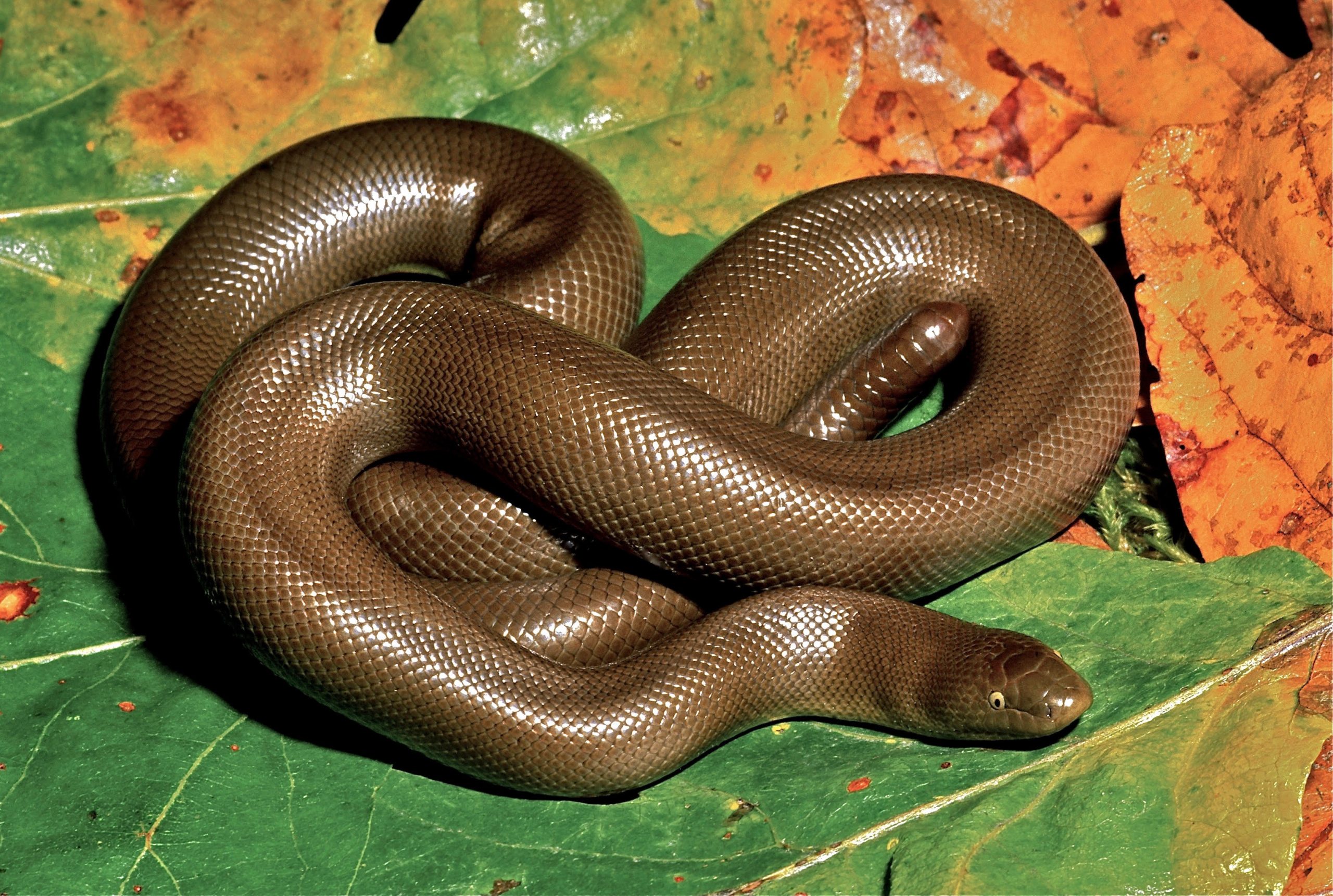
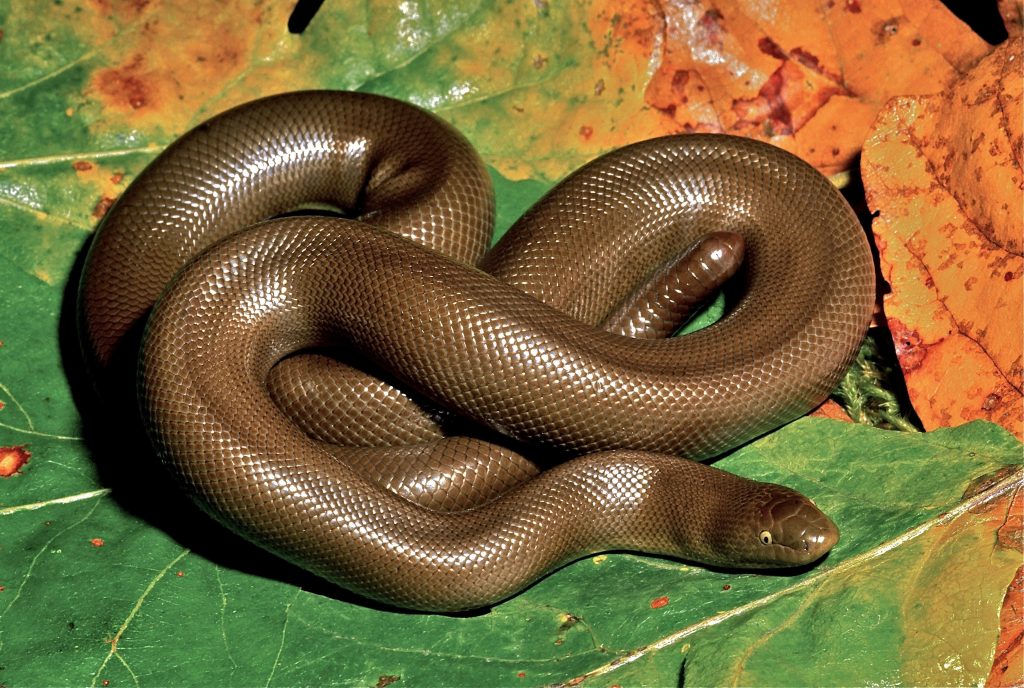 Smaller than its famously big tropical relatives (rarely more than 2 feet in length), this is the most northerly ranging boa species. The name is derived from its loose, rubbery skin. Also sometimes called the “two-headed snake” because of its distinctive blunt tail. Being slow-moving, shy, and never attempting to bite, when frightened a rubber boa merely rolls into a ball, protectively hiding the head under its coils. The hard-tipped, stubby tail is then protruded as a decoy “head” to attract biting predators away from more vulnerable body parts. Primarily feeds on small rodents, using constriction to kill prey.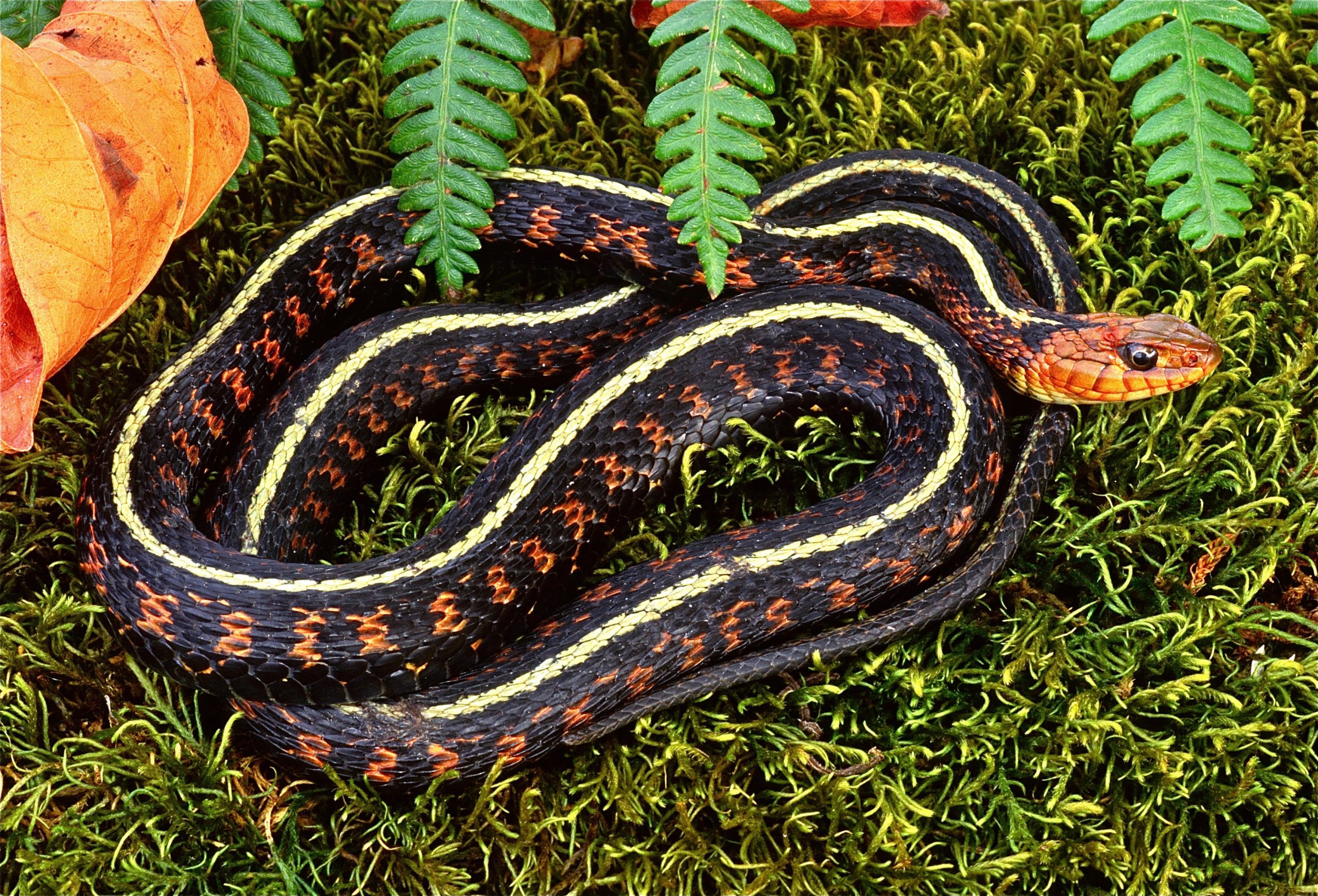
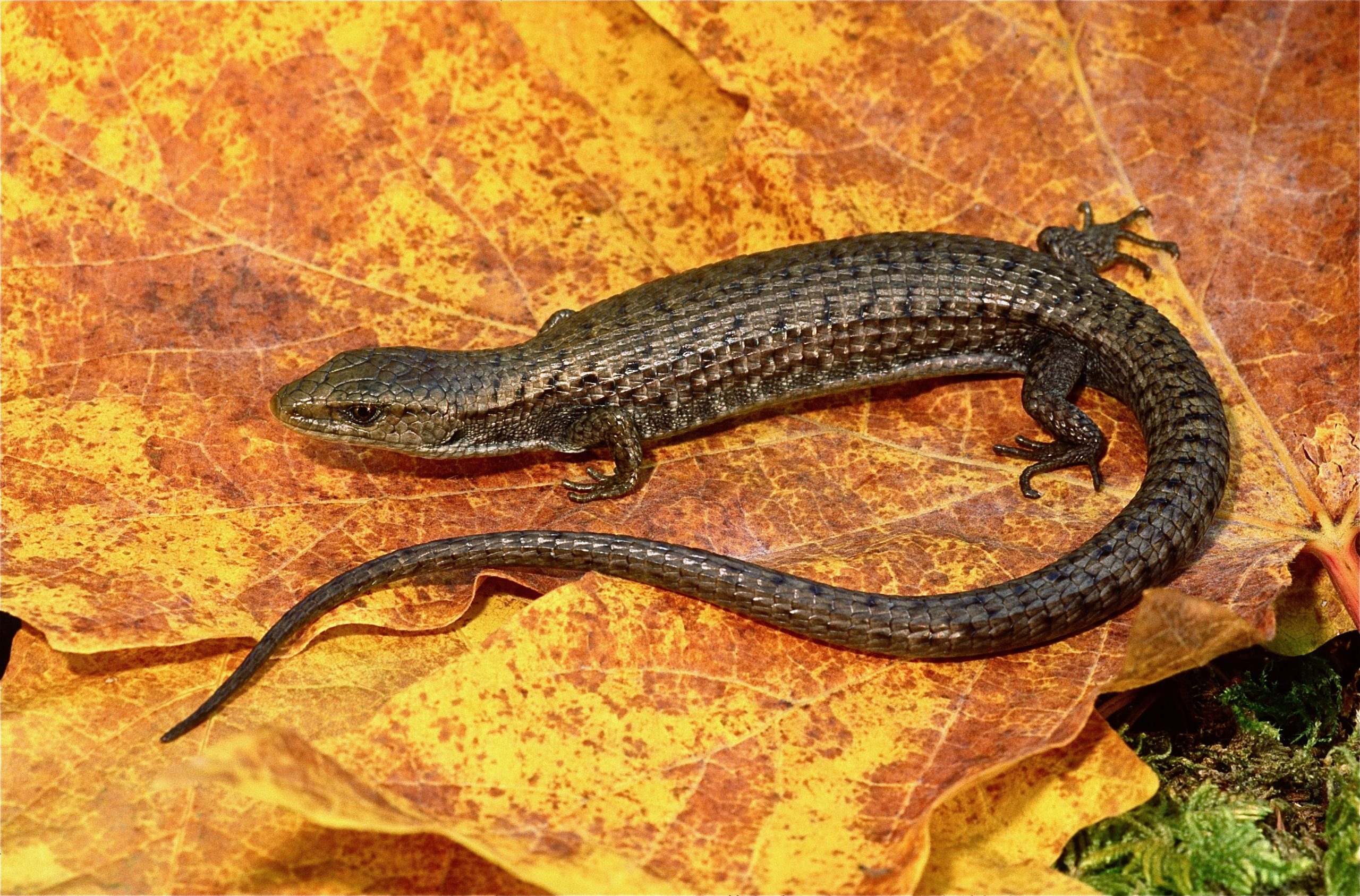
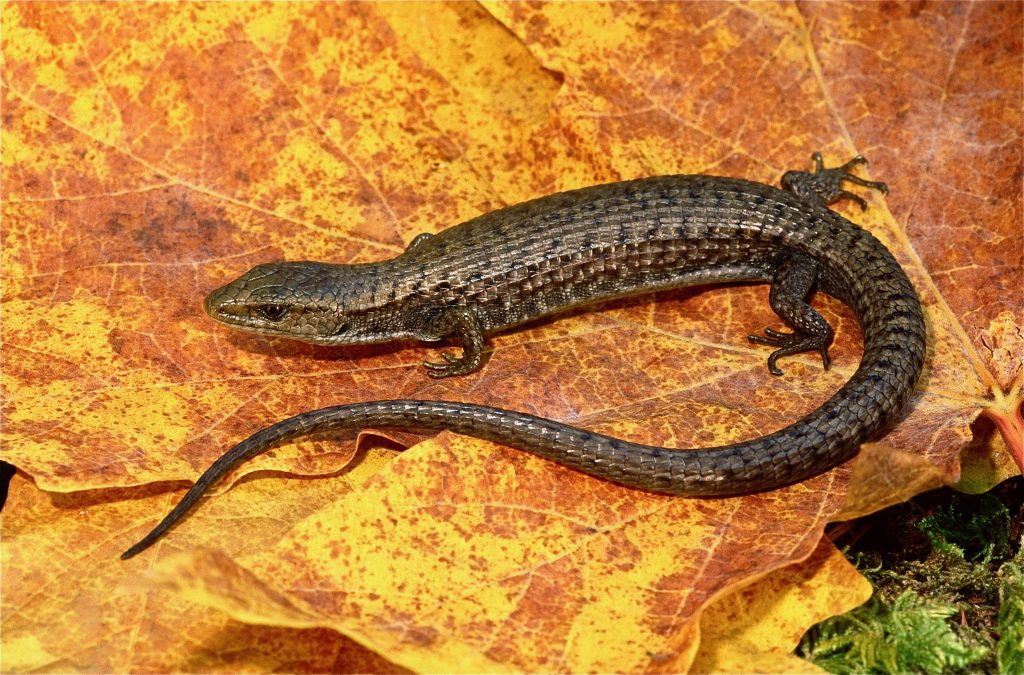 A truly Pacific Northwest reptile that inhabits openings in mountain coniferous forests, and is the only lizard species along our region’s northerly coast. As an adaptation to shady, cool environments, it is live-bearing (viviparous). This allows pregnant females to aid embryonic development of their young by seeking sun-warmed spots among trees. Can be differentiated from the closely-related Southern Alligator Lizard by eye color. Northerns have dark amber-brown eyes, whereas the Southern’s eyes are light golden-yellow.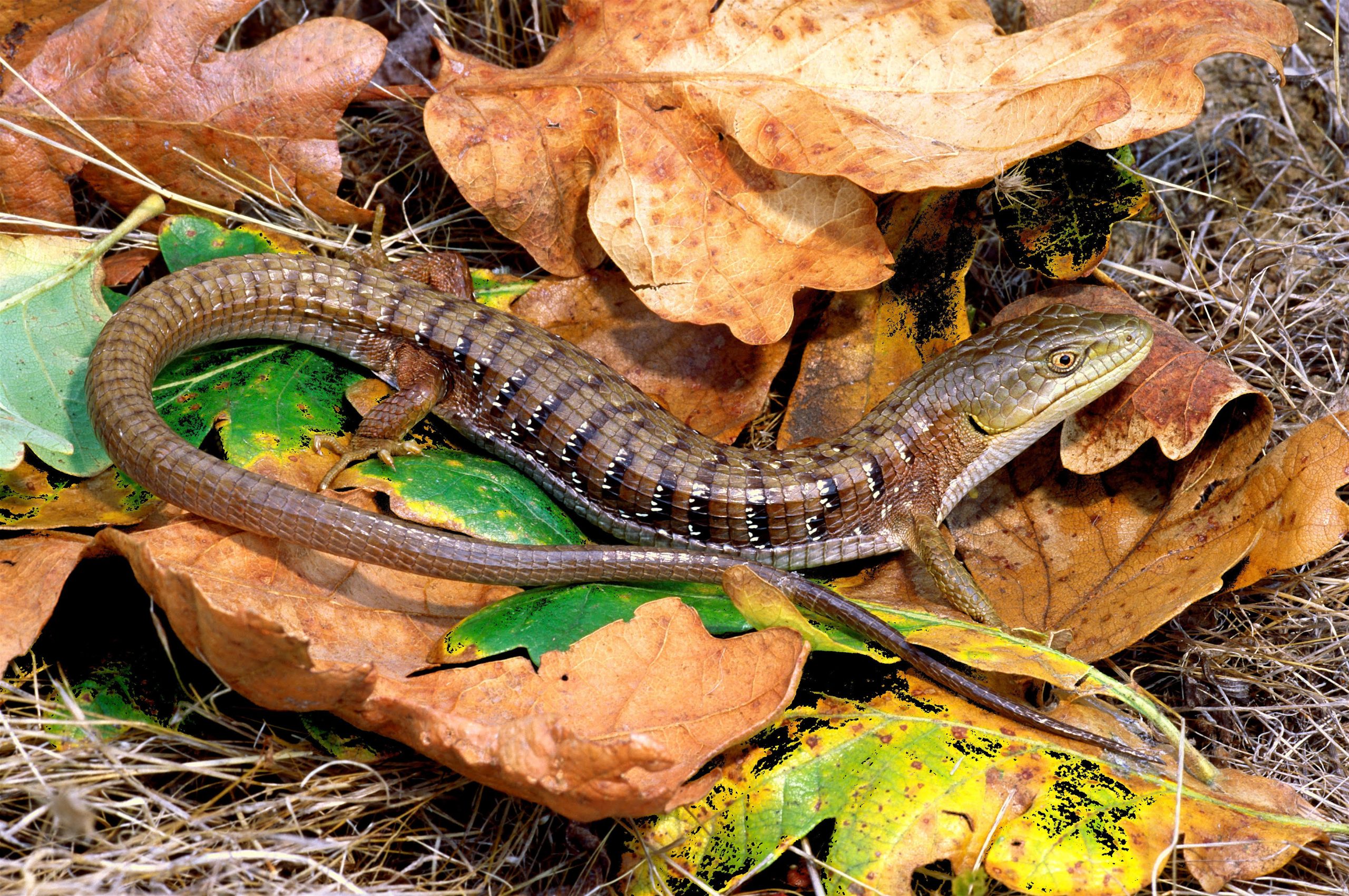
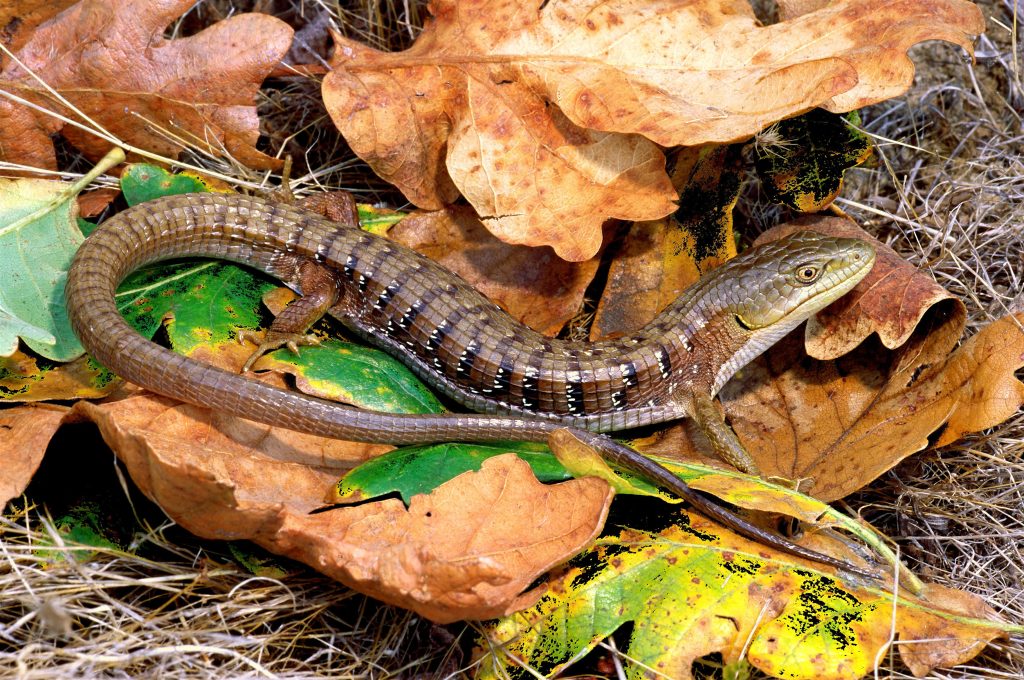
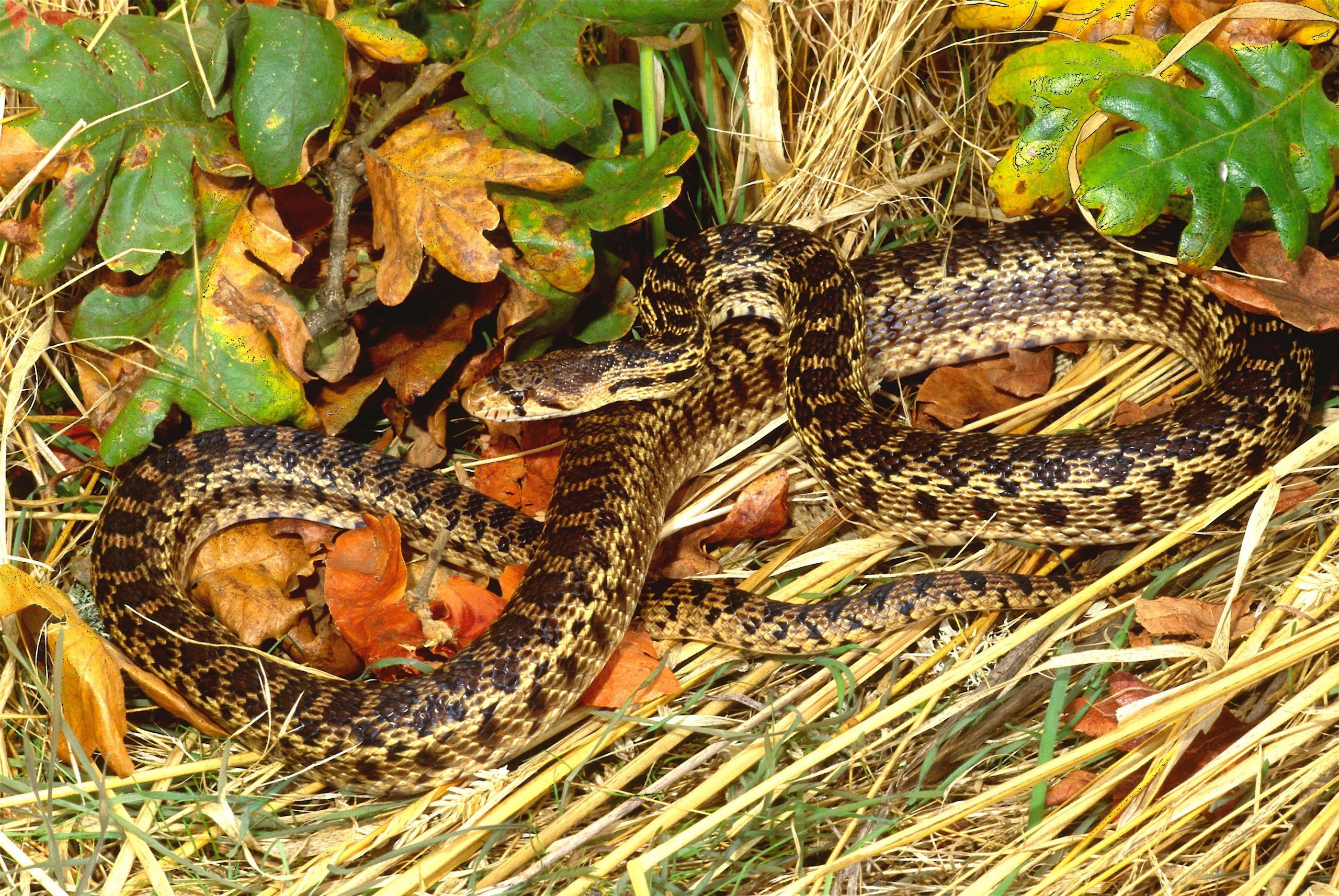
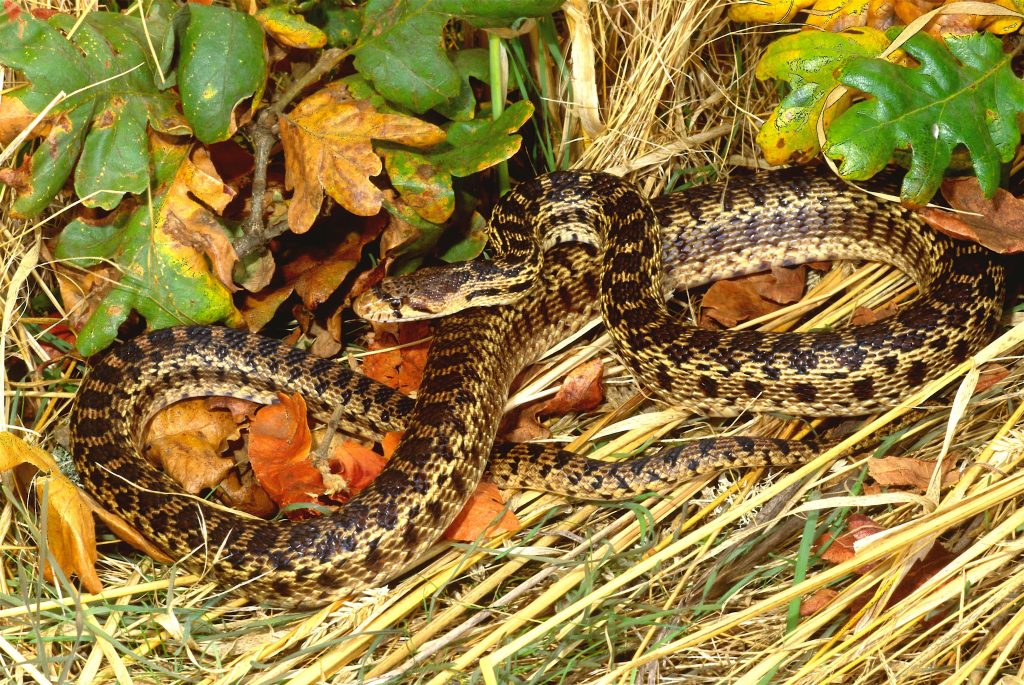 As its name suggests, this species is agriculturally valuable, eating gophers and other small mammals, such as mice, rats, moles and squirrels. Constriction is used to subdue prey. Also often called a “bull snake” or “blow snake” because when defensive it hisses loudly, coiling and flattening the head while nervously vibrating its tail. This threatening display, combined with its blotched pattern, sometimes causes people to erroneously think it’s a venomous rattlesnake——often ending with the Gopher Snake being needlessly killed.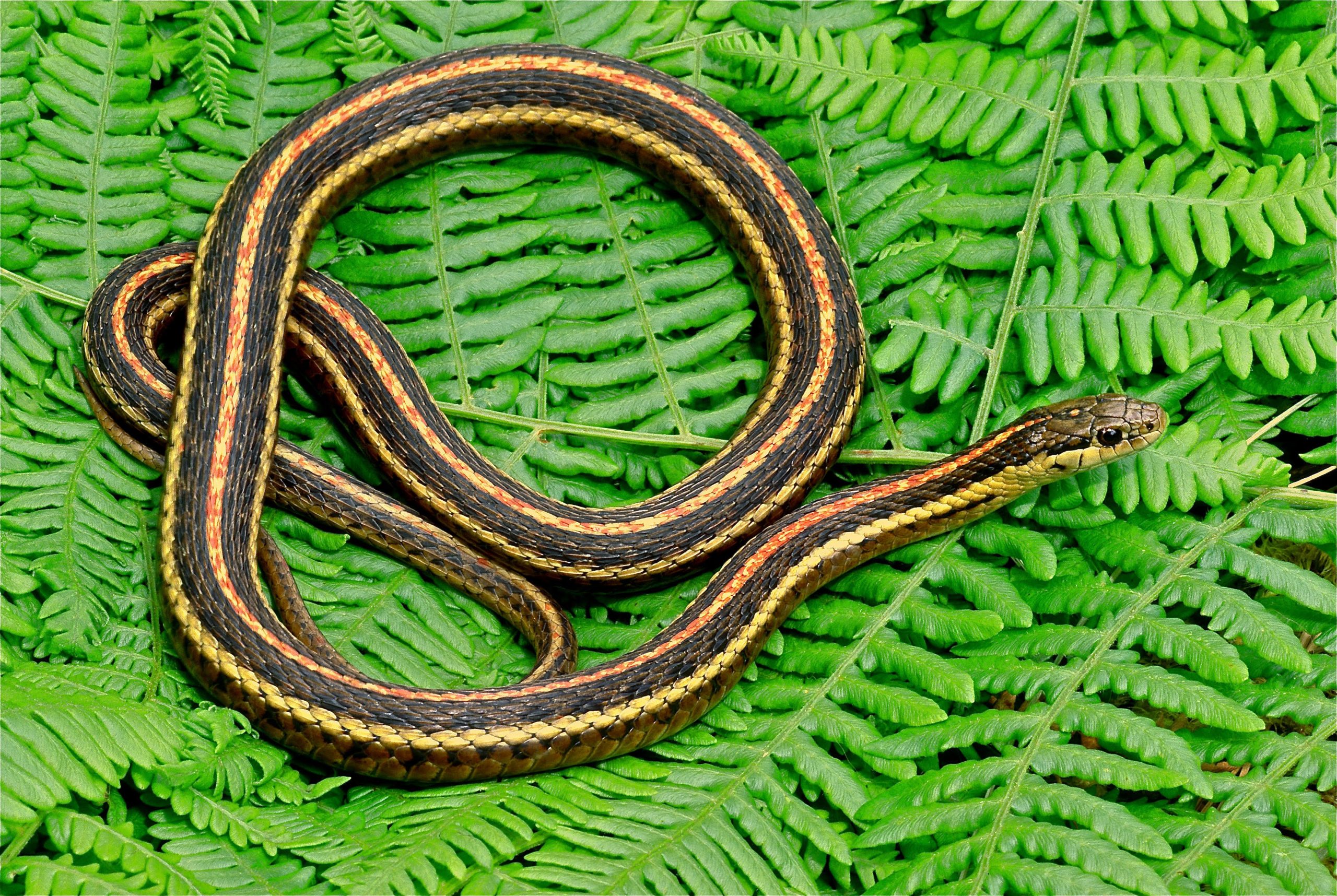
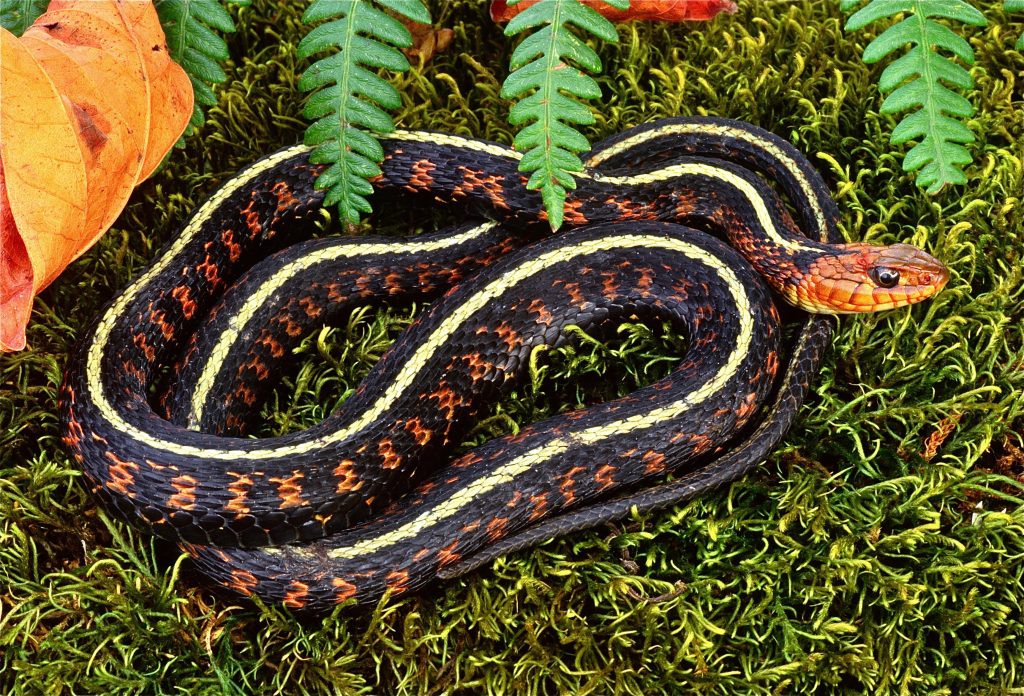
 This is the most commonly seen snake species west of the Cascade Mountains, and can have red, orange, yellow, or greenish-blue stripes. Often encountered in backyards, it’s sometimes referred to as a “gardener snake.” That’s a well-earned name because its favored food is a garden pest—-slugs. So anyone attempting to grow vegetables should appreciate this reptile. Its diet also includes earthworms and snails, along with occasional small frogs and salamanders. Like all kinds of garter snakes, when handled it emits a foul-smelling musk to discourage a would-be captor.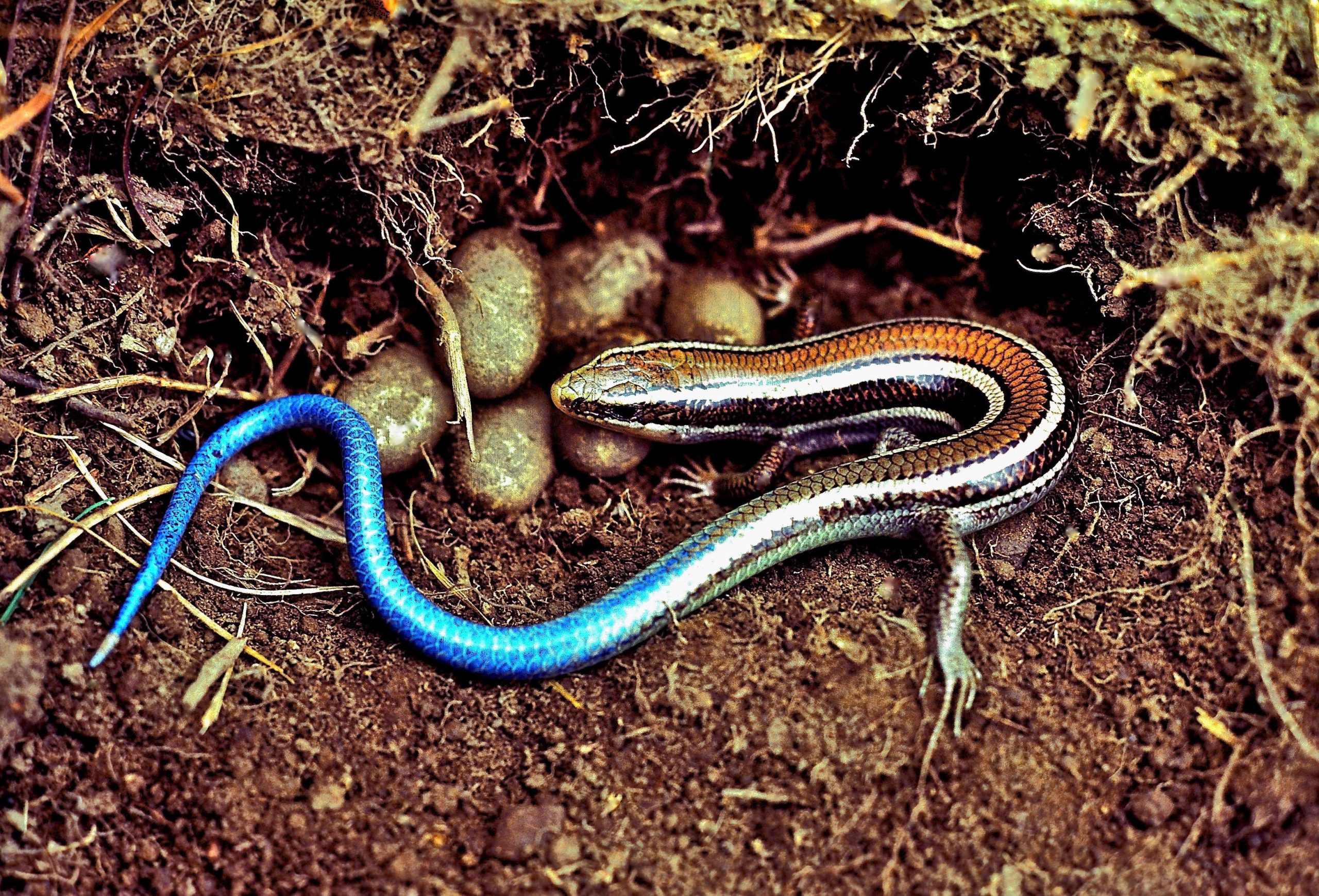
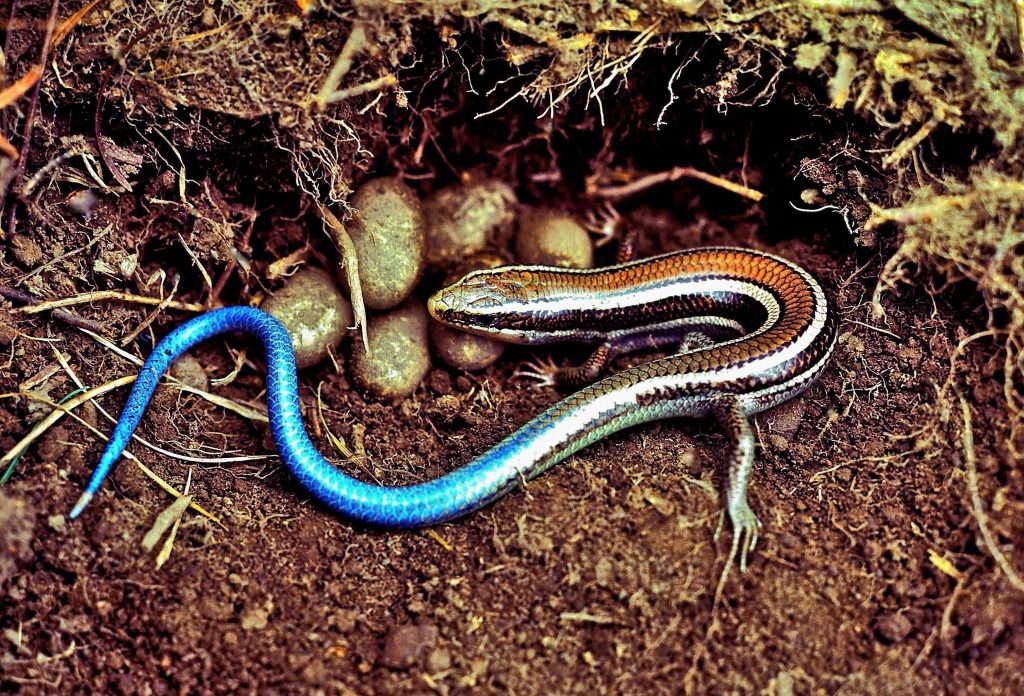 This lizard is easily recognized by its brilliantly blue tail. As a skink ages, the tail progressively becomes more grayish; but it can still be identified by the distinctive cream-colored stripes and smooth shiny scales. The short legs cause it to crawl with a slithering motion, initially giving a momentary impression of a tiny blue snake. The female skink is the only reptile in our region that will guard its eggs, remaining hidden in a cavity under a rock or log until they hatch. In the Willamette Valley, it’s an inhabitant of oak savannas, primarily in rocky places.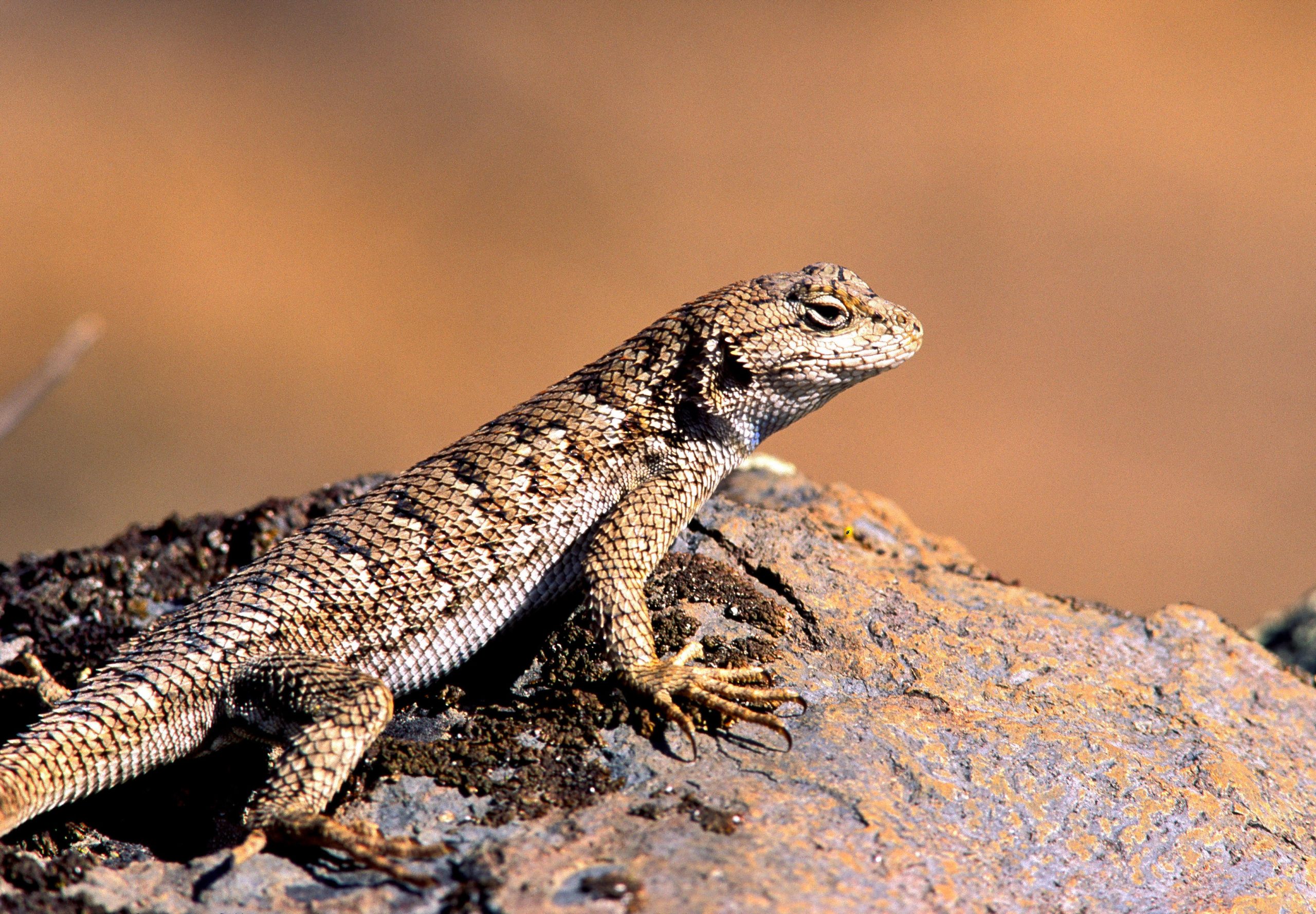
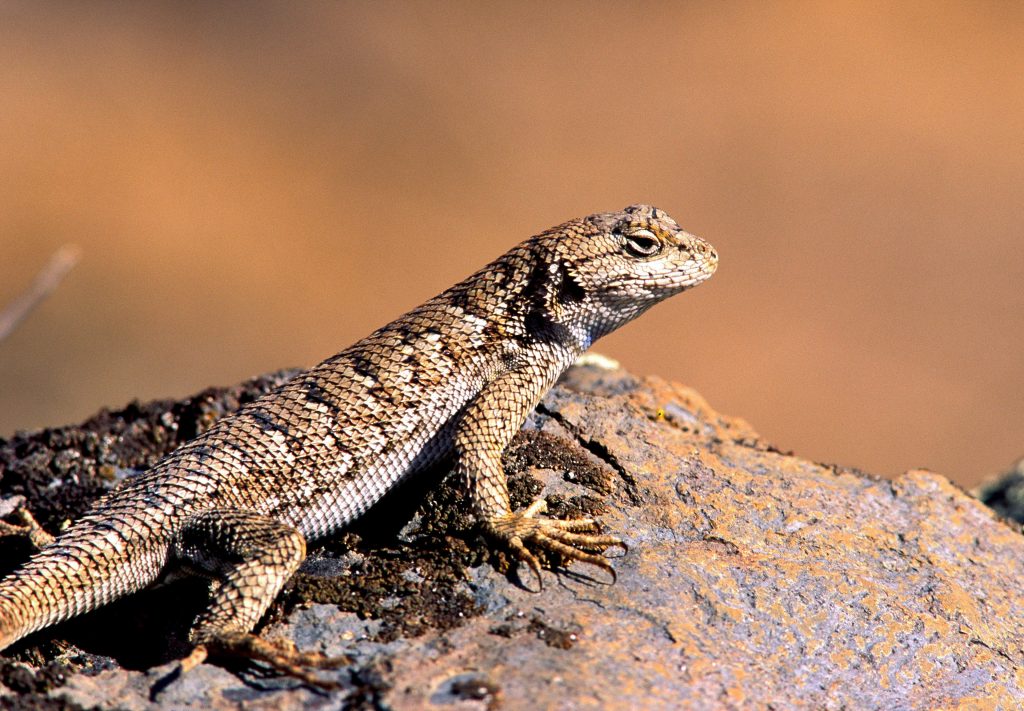 Well known as the “blue-bellied lizard” due to patches of bright blue on its abdomen and throat (most vivid in males). Also distinctive are the pointy scales, which make the upper-sides of the lizard look and feel prickly. In the Willamette Valley, this reptile primarily inhabits sunny openings in oak woodlands, often being seen basking on logs, stumps, rocks, and wooden fence posts—-hence, their common name. Wary and fast, fence lizards are difficult to capture, sometimes ascending a tree to nimbly avoid a pursuer by going around and around the trunk.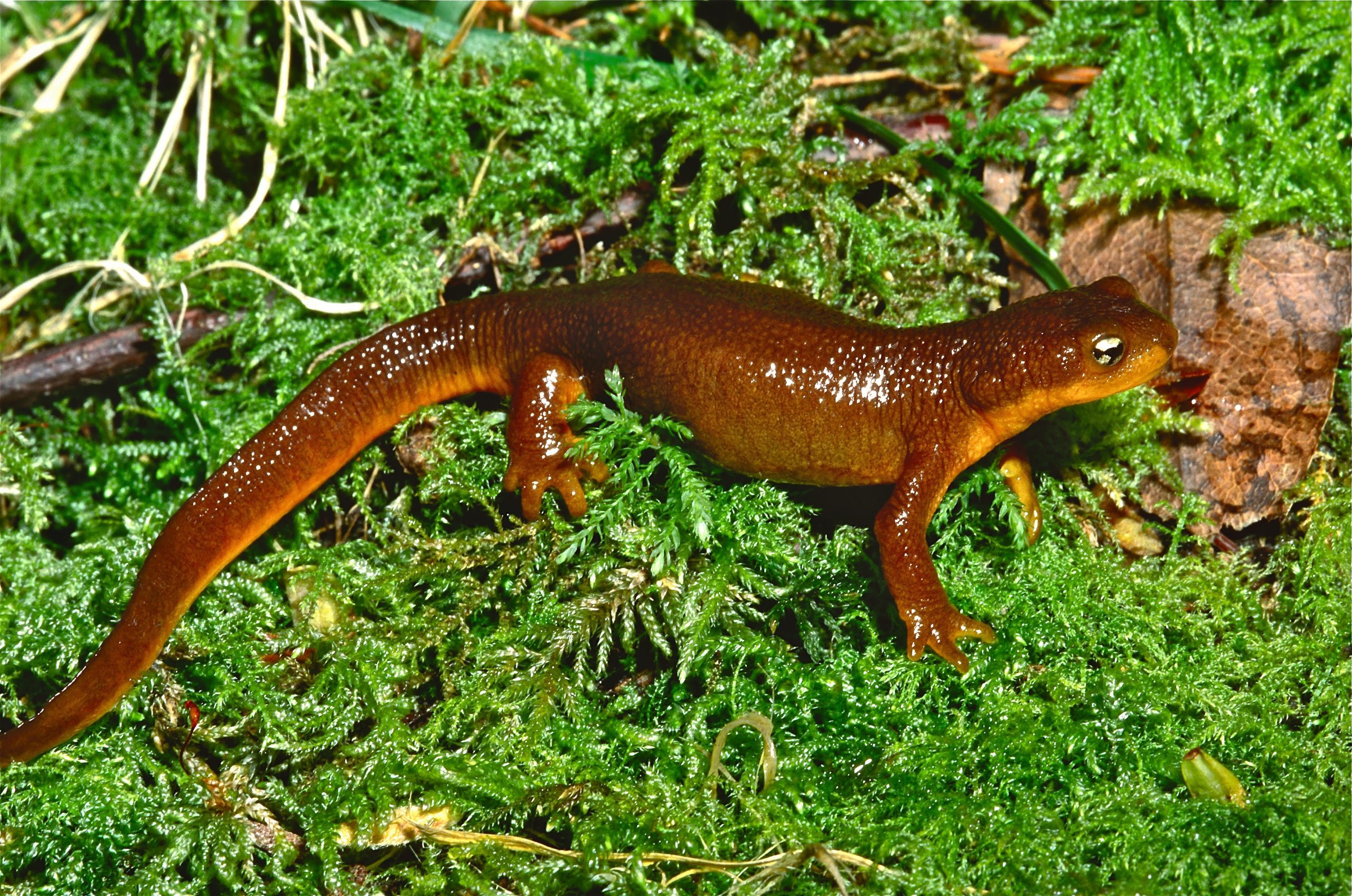
 This is the most commonly seen salamander in the Pacific Northwest, often crossing roads day and night during rainy weather. The characteristic bumpy texture on its back is composed of small poison glands that secrete an extremely potent toxin when the newt feels threatened. Confronted with a predator, it arches its head and tail upward, exposing the colorful orangish-yellow undersides as a warning of, “Don’t eat me, I’m poisonous!” During late winter through spring, large numbers of newts gather in aquatic areas to breed. Some individuals remain in water year-round, but most move to the land after the egg-laying season, hiding under moist rotting logs and other surface cover. When handling this toxic amphibian, avoid touching your eyes and mouth, finishing with a soapy hand-washing.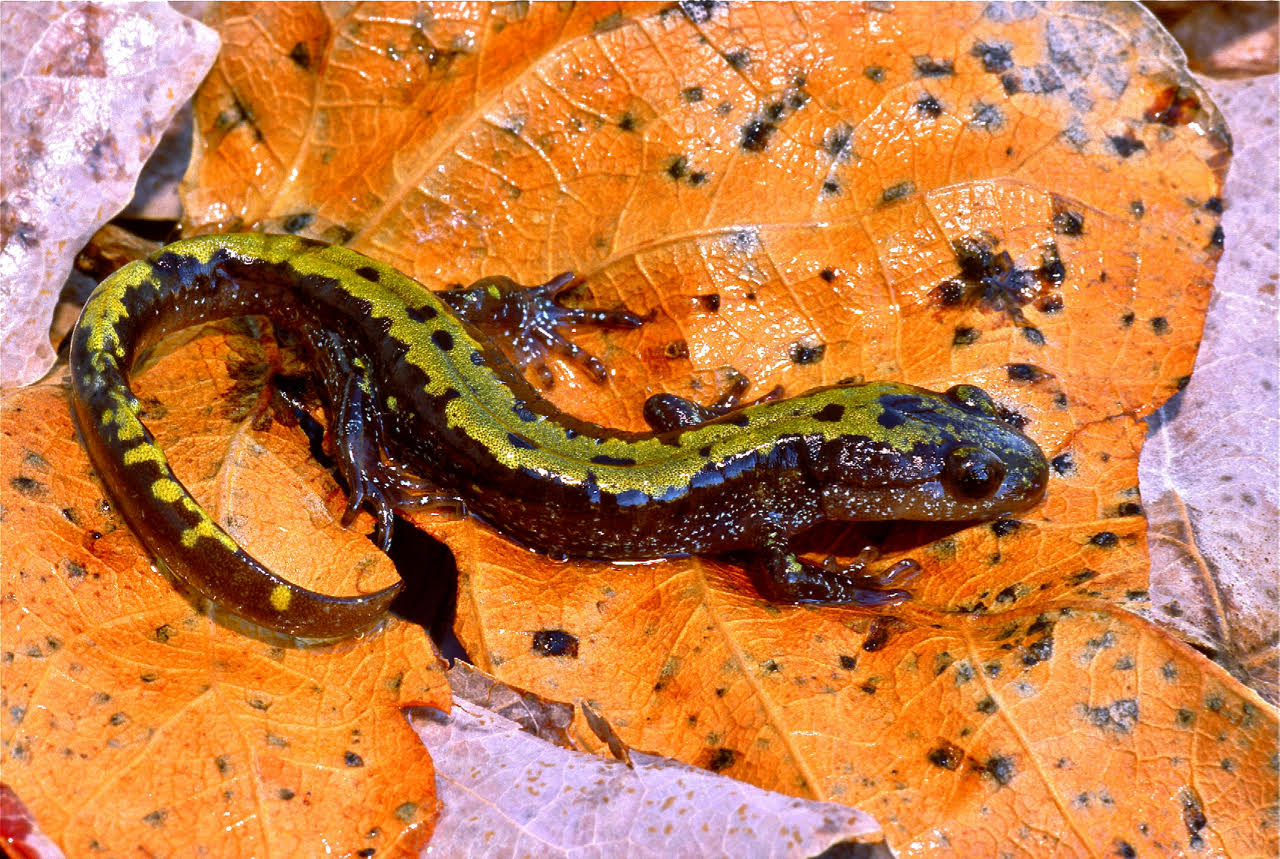
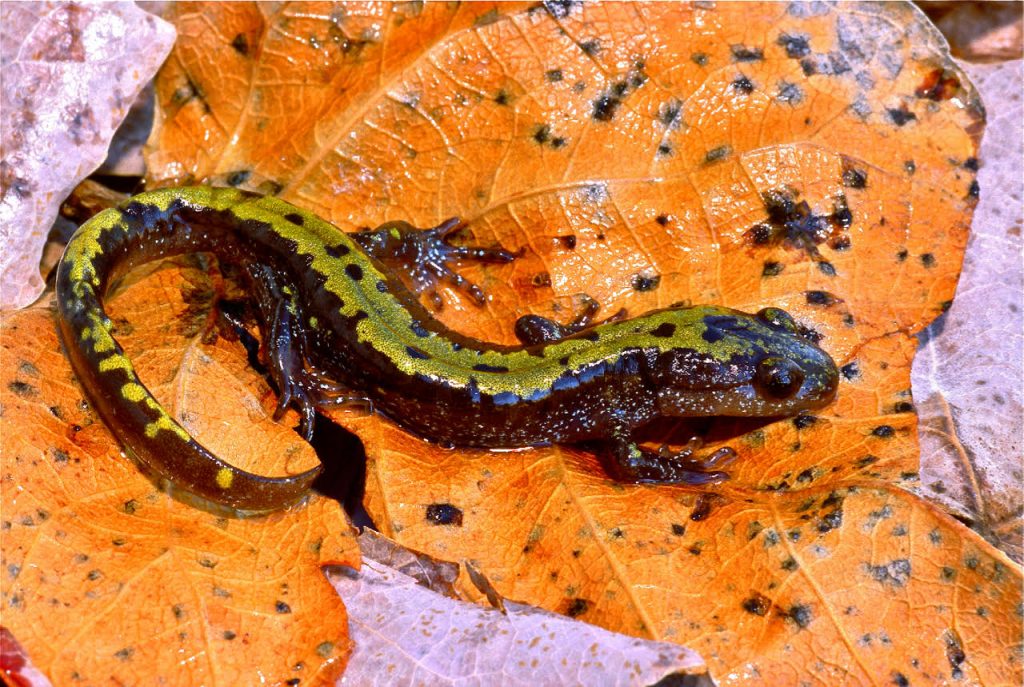 True to its name, the fourth toe on each hind foot is extremely elongated. During winter in the Willamette Valley’s relatively mild climate, these salamanders migrate on rainy nights to shallow ponds, water-filled ditches, and other wet places to lay eggs. Hatchling larvae (“tadpoles”) are tan-colored with a feathery gill extending on each side of their broad head. By mid to late summer, they metamorphose and move onto land. Except for the aquatic breeding season, this secretive species primarily lives underground, but is occasionally found hiding beneath moist rotting logs, pieces of bark, boards, rocks and other surface debris.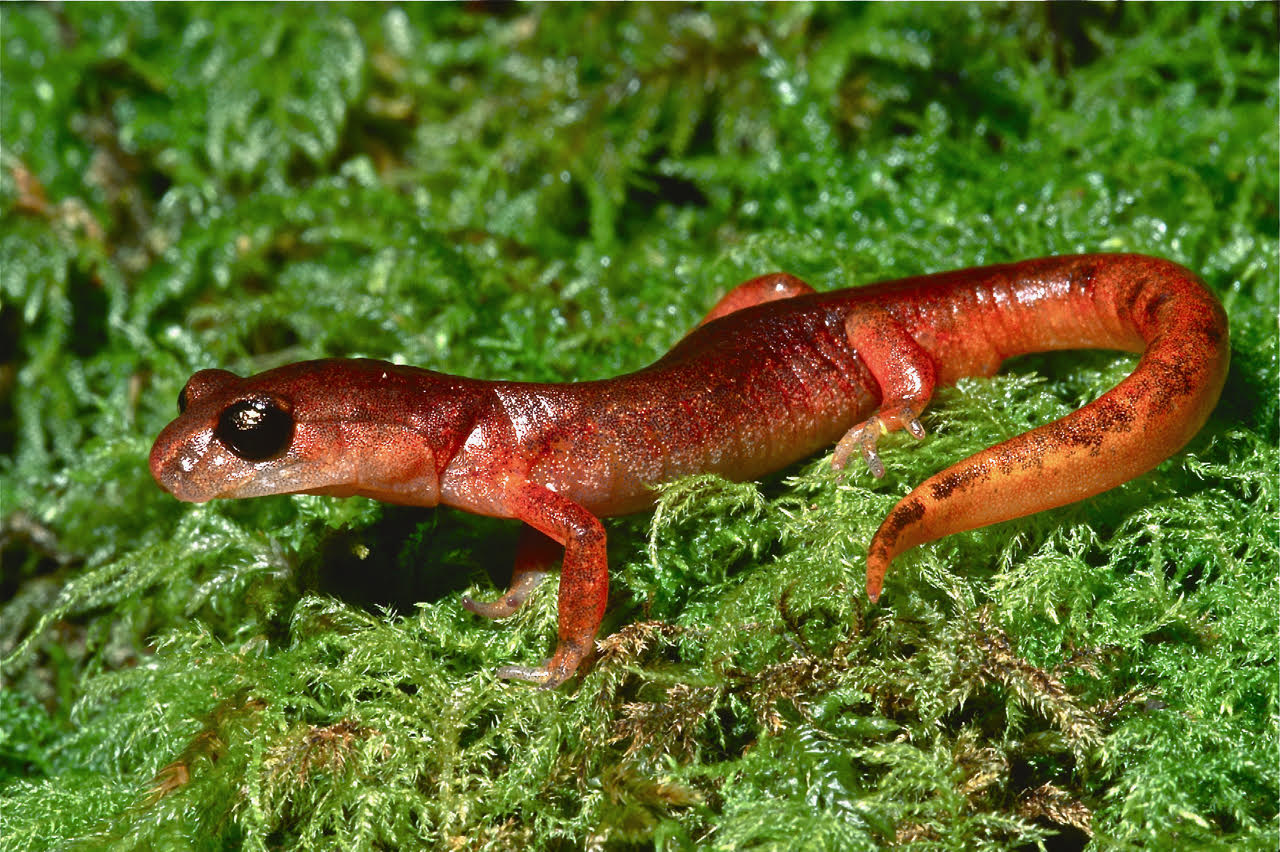
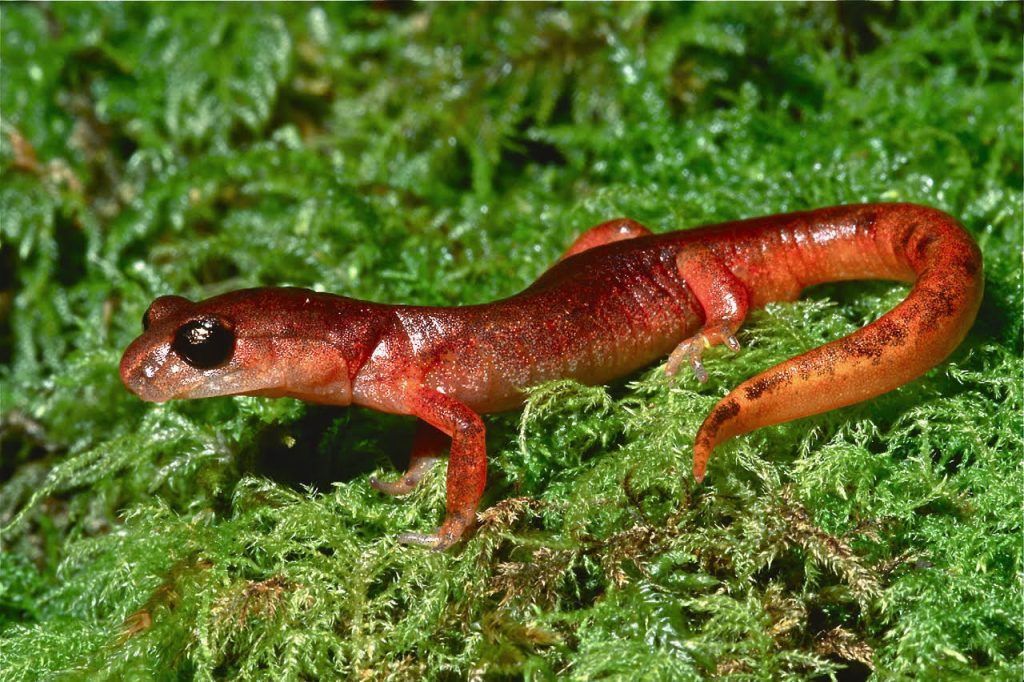 Usually found under moist logs and within decaying stumps, the Ensatina’s coloring somewhat matches the reddish-brown rotting wood it inhabits. Although this species tolerates dry habitats better than most other kinds of salamanders, during the parching heat of summer they retreat underground into rodent burrows and the channels of decomposing dead tree roots. To ward off predator attacks, an Ensatina will stand stiffly upright on its legs and twitch the tail, which exudes a toxic white mucus. If that defensive display fails, its tail snaps off and wriggles as a distraction while the little salamander escapes into a hiding place (a new tail gradually regrows over the next year or so)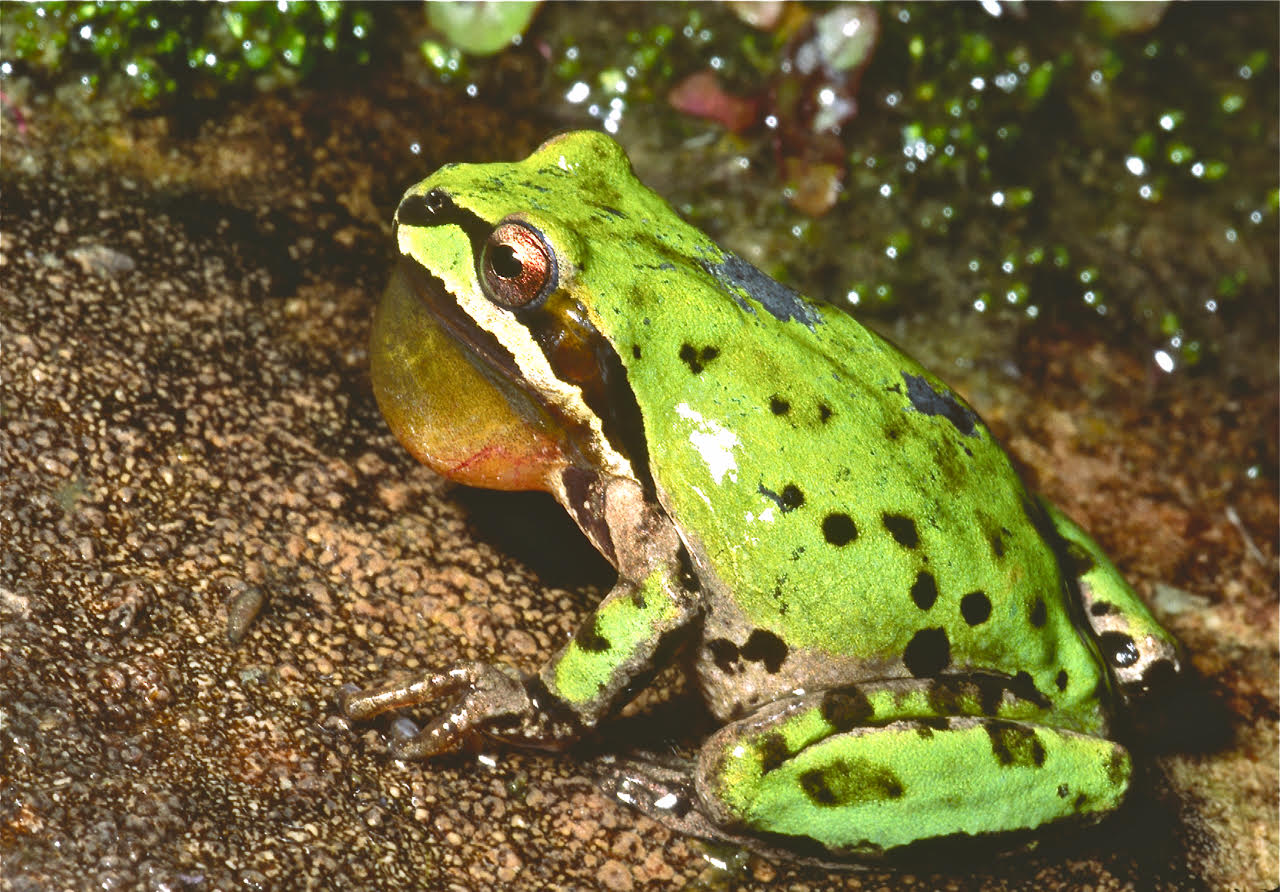
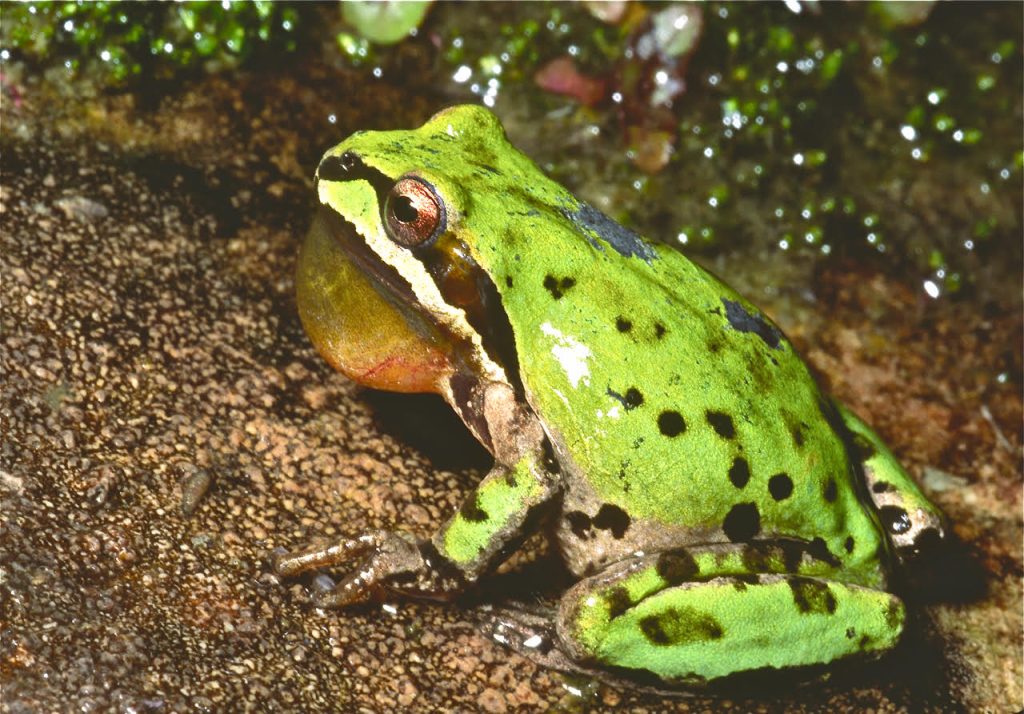 Although most of these dinky amphibians are bright green, some are tan, grayish-brown, pinkish-tan, reddish-bronze, or greenish-blue. No matter what color, all of them feature a dark eye-stripe “mask” and various brown to black mottlings and spots on the back. As the name indicates, they have suction-pad toes for climbing into trees and shrubs——and even up the smooth surface of glass! For such a small critter, they collectively have a BIG sound during the late-winter/early-spring breeding season. At that time, hundreds of treefrogs gather in shallow ponds, slow-moving streams, water-filled ditches, and temporary rain-pools to lay egg masses, the males calling with gusto as their throat-sack puffs in and out. Anyone who’s home is located by one of these mating frenzies may have difficulty sleeping because of the noise. Individually, this species’ call sounds like “creck-eck, creck-eck” repeated over and over.